
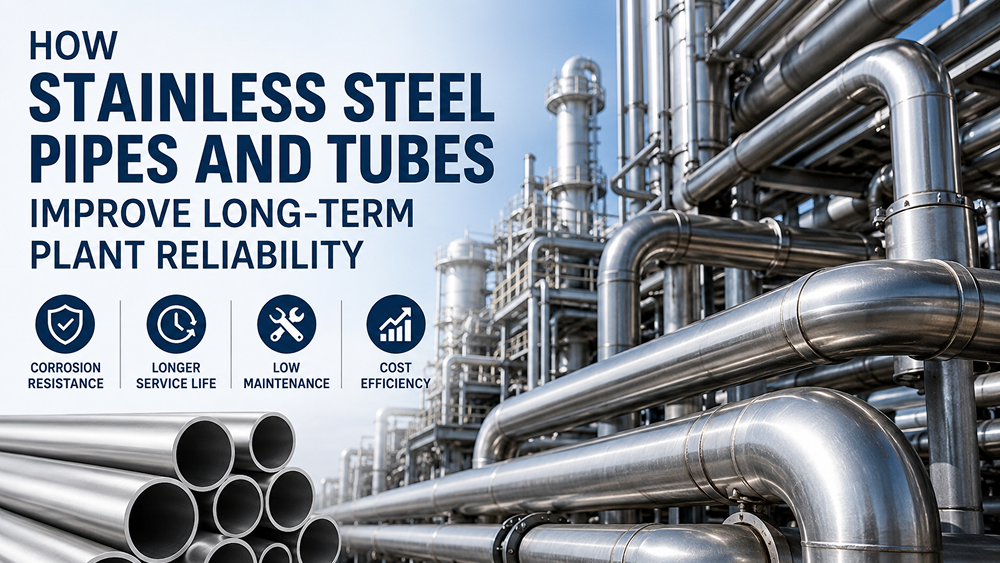
Ask any maintenance head at a plant that's been running clean for ten-plus years what still original equipment is. Nine times out of ten, part of the answer is the piping. Pumps get replaced. Control panels get upgraded twice over. But a stainless steel line, specified right the first time, just keeps going.
That's not luck. It comes down to what stainless actually does when it's sitting under pressure and chemical exposure for years without a break.
Most shutdowns don't announce themselves. They start as a pinhole in a carbon steel line nobody's checked in months, or a fitting that's been thinning out quietly from the inside. By the time it's visible, you're already looking at a shutdown and a clean-up crew.
SS 304 and SS 316 pipes form a passive oxide layer that resists this kind of slow damage. Not as much of an upside as most people think, but the only one that actually appears on the maintenance budget—leaks, midnight contractor calls, unexpected downtime. For anyone handling acids, saline solutions, or highly pure liquids, just this is usually enough to cover the cost of the material upgrade.
Plants don't sit at one temperature. Steam lines run hot, chilled lines run cold, and a lot of process piping cycles between both several times a shift. Carbon steel fatigues under that kind of stress eventually.
Stainless holds its strength across the range, which is part of why it's everywhere in refineries, pharma, and food processing—places where a failed pipe isn't just a repair bill, it's an audit finding.
Every weld is a place things can go wrong. The use of seamless stainless tube reduces jointing, thus reducing inspection points and places where leaks can occur. It is simply easier to install, and this is never an issue for anyone.
Wall thickness that drifts batch to batch. A grade that doesn't actually match the mill cert. Welds nobody bothered to test properly. Any one of these quietly cancels out everything stainless is supposed to give you. This is really where the manufacturer matters as much as the metal.
Steelage Alloys LLP has been manufacturing and supplying stainless steel pipes and tubes for over two decades, across India and 80-plus countries, in grades from 304 and 316 up through duplex and super austenitic alloys. If you're speccing a new line or replacing an old one, it's worth a conversation with people who've actually seen what fails in the field. Reach them through Steelage Alloys for grade selection help and a quote.
As a stainless steel pipes and tubes manufacturer in India with over two decades in the business, Steelage Alloys supplies SS 304 and 316 grades to plants across 80-plus countries.
SS 316, generally. The added molybdenum handles chlorides and acidic conditions better than 304 does.
20 to 25 years is common with decent installation and upkeep.
Almost always. Fewer leaks and a longer replacement cycle usually pay back the difference within a few years.
To build highly reliable industrial plants, specifying the right piping is a necessity. High-quality stainless steel seamless pipes and tubes resist chemical corrosion, endure aggressive temperature fluctuations, and streamline configuration configurations by reducing critical weld joints.
Partnering with a reliable manufacturing expert ensures the piping supplied matches international compliance and mill certifications. For grade speccing and customized estimates, get in touch with Steelage Alloys LLP today.